.png.avif)
China water cooled engine supplier
Experience reliable, high-performance operation with BISON water-cooled engines, built for demanding working conditions. As a professional OEM manufacturer in China, BISON designs and manufactures water-cooled engines that deliver stable power output, efficient temperature control, and long service life.
With advanced manufacturing technology and a strong focus on innovation, BISON provides flexible water-cooled engine solutions to meet different customer needs. Partner with a trusted OEM supplier committed to performance, durability, and long-term cooperation. Contact BISON to learn more about our water-cooled engine range and how it can power your business effectively.

water cooled engine
Partnering with BISON means choosing a trusted manufacturer of high-quality engines and power solutions that deliver performance, durability, and long-term value. As a leading OEM of water-cooled engines, BISON combines advanced engineering, strict quality control, and innovative solutions to meet international standards. We provide customized engines for automotive, industrial, marine, and generator applications, ensuring reliable power for every need.

mid-power 16HP motor for agricultural use
BISON, a professional agricultural motor manufacturer and factory in china, offers a reliable 16hp motor

high-torque 36HP diesel motor
BS36M high-torque 36HP diesel motor is a high-quality solution meticulously crafted by BISON. Powerful and

28HP liquid-cooled diesel power motor
BISON, a professional diesel motor manufacturer, presents a 28HP liquid-cooled diesel motor designed specifically for

heavy duty 45HP water cooling engine
As a professional engine manufacturer and factory, BISON offers this heavy-duty 45hp water-cooled engine, a

8HP water cooled single cylinder engine
BISON 8hp water cooled single cylinder engine with strong power, reliable quality, and factory-direct solutions

40HP horizontal shaft power unit
BISON manufactures 40HP horizontal shaft power units and provides OEM services and comprehensive business support.

22 horsepower industrial diesel engine
BISON manufactures this 22 horsepower industrial diesel engine, and we have many years of experience

12HP single-cylinder motor for small machinery
BISON, a leading Chinese motor manufacturer, offers a reliable, affordable 12HP single-cylinder motor suitable for

20hp reliable diesel engine – water cooling system
BISON, a professional manufacturer of water-cooled engines, brings you a reliable 20-horsepower diesel engine.

18hp liquid cooled engine
BISON 18hp liquid-cooled engine offers reliable power and high fuel efficiency, offered directly by a
Start your Chinese water cooled engine wholesale business from now on.
Why Choose BISON?
Competitiveness of BISON water cooled engine
Choosing the right manufacturer is crucial, and BISON has earned a global reputation for engineering excellence, innovation, and customer satisfaction. Here’s why clients trust our engines:
Durable construction
Built with high-quality, corrosion-resistant materials, our engines withstand mechanical wear and extreme operating conditions. Whether in high-temperature industrial environments, continuous-duty applications, or marine settings, water-cooled engines deliver consistent and dependable performance.
Optimized fuel economy
Each engine is fine-tuned to deliver maximum power while minimizing fuel consumption, improving operational efficiency. Stable combustion reduces fuel waste and helps lower emissions, supporting more environmentally responsible operation.
Custom options
BISON provides tailored engines to meet specific power, load, and application requirements. Engines are designed using CAD software and rigorously tested to ensure accuracy, performance, and reliability.

Global support network
Our expert team offers full technical support, training, and readily available spare parts, ensuring smooth operation and minimal downtime worldwide.
High-performance heat dissipation
Liquid cooling efficiently removes excess heat and keeps the engine operating at a stable, controlled temperature, even under heavy loads. Lower and more consistent temperatures reduce thermal stress on internal components, minimizing wear and extending service life.
Noise reduction technologies
Water-cooled systems help absorb and dampen engine noise, resulting in smoother and quieter operation compared to air-cooled engines.
BISON water cooled engine comparison chart
| Engine model | BS180M | BS22M | BS36M | BS40M | BS45M | BS13HM | BS16HM | BS1105GM | BS1110GM | BS28AM |
| Fuel type | Diesel | Diesel | Diesel | Diesel | Diesel | Diesel | Diesel | Diesel | Diesel | Diesel |
| Engine speed | 2600RPM | 2200RPM | 2200RPM | 2200RPM | 2200RPM | 2400RPM | 2400RPM | 2200RPM | 2200RPM | 2200RPM |
| Bore * stroke | 80*80mm | 115*120mm | 135*130mm | 140*130mm | 142.5*132mm | 95*95mm | 100*100mm | 105*115mm | 110*115mm | 122*120mm |
| Displacement | 0.402L | 1.246L | 1.86L | 2L | 2.11L | 0.673L | 0.758L | 0.996L | 1.093L | 1.4L |
| Power of engine (hp) | 8HP | 22HP | 36HP | 40HP | 45HP | 12HP | 16HP | 18HP | 20HP | 28HP |
| Engine type | Single cylinder,horizontal, water-cooled, 4-stroke, direct injected | |||||||||
| Fuel capacity | 6L | 13.4L | 21.5L | 21.5L | 21.5L | 10.5L | 10.5L | 13.4L | 13.4L | 21.5L |
| Oil capacity | 2.2L | 3.1L | 4L | 4L | 4L | 1.6L | 1.6L | 2.5L | 2.8L | 3.1L |
| Starting system | Recoil start/Electric start | Recoil start/Electric start | Electric start | Electric start | Electric start | Recoil start/Electric start | Recoil start/Electric start | Recoil start/Electric start | Recoil start/Electric start | Recoil start/Electric start |
| Fuel consumption radio | ≤244.8g/KW.h | ≤244.8g/KW.h | ≤250g/KW.h | ≤280g/KW.h | ≤268g/KW.h | ≤244.8g/KW.h | ≤244.8g/KW.h | ≤244.8g/KW.h | ≤244.8g/KW.h | ≤244.8g/KW.h |
What makes water-cooled engines better than air-cooled engines?
Water-cooled engines maintain a more stable operating temperature, which leads to better performance, improved fuel efficiency, and longer service life. By using liquid coolant to transfer heat from the engine to a radiator, they provide precise temperature control, quieter operation, and reduced thermal stress on components.
In comparison, air-cooled engines rely on airflow over cooling fins to remove heat. While they are simpler, lighter, and less expensive to manufacture, they tend to run hotter, produce more noise, and experience uneven cooling under heavy loads or long operating periods.
When to choose water cooling:
Water-cooled engines are ideal for cars, trucks, generators, marine engines, and heavy-duty or high-performance machinery. These applications benefit from consistent temperatures, higher efficiency, reduced noise, and reliable long-term operation.
When to choose air cooling:
Air-cooled engines are commonly used in small motorcycles, lawnmowers, scooters, and portable equipment. Their simple design, lower cost, and lighter weight make them suitable for lower power demands and short operating cycles.
In summary, water cooling is the better choice when durability, quiet operation, and consistent performance are critical, while air cooling is practical for smaller, simpler applications where cost and simplicity matter most.
Are water-cooled engines suitable for all seasons?
Yes. When filled with the correct antifreeze coolant mixture, water-cooled engines operate reliably in both hot and cold conditions. Antifreeze prevents freezing in low temperatures, raises the boiling point in hot environments, and protects the cooling system from corrosion, ensuring year-round performance.
How to maintain a water-cooled engine?
Regular maintenance is essential to keep a water-cooled engine running efficiently, prevent overheating, and avoid costly repairs. Proper care not only extends engine life but also ensures reliable performance and minimal downtime throughout its operating cycle.
Check and replace coolant regularly
Coolant gradually loses its heat-transfer and corrosion-protection properties over time. Regularly checking coolant levels and performing timely coolant flushes help maintain effective temperature control and protect internal engine components. Replacing old coolant with fresh fluid ensures the cooling system continues to function properly.
Clean the radiator
Dust, dirt, insects, and debris can block airflow through the radiator, reducing its ability to dissipate heat. Periodic cleaning keeps airflow unobstructed, allowing the radiator to cool the engine efficiently, even under heavy loads or in hot environments.
Inspect hoses and the water pump
Cooling hoses can crack, harden, or leak, while the water pump may wear out over time. Routine inspection helps identify signs of damage or reduced circulation early, preventing coolant loss, overheating, and unexpected breakdowns.
Monitor for signs of overheating
Pay attention to temperature warning lights, unusual noises, coolant leaks, or steam from the radiator. Detecting overheating early allows you to shut down the engine and resolve the issue before serious damage occurs.
Choosing BISON: Excellence in water cooled engines
Heat is the silent enemy of the combustion engine. Without effective cooling, the extreme temperatures produced during combustion can damage components, reduce efficiency, and significantly shorten engine life.
During the power stroke, temperatures inside the cylinder can exceed 2,000°C (3,600°F), far higher than what many metal components can safely withstand. If this heat is not properly controlled, it quickly leads to serious engine problems.
Component failure is one of the most direct risks. Excessive heat can cause parts such as the cylinder head or engine block to warp, crack, or deform, resulting in leaks, loss of compression, or complete engine failure. Prolonged exposure to high temperatures weakens the engine’s structural integrity.
Oil breakdown is another major issue. Engine oil relies on stable temperatures to lubricate moving parts effectively. When overheated, oil loses its viscosity and protective properties, increasing friction and accelerating wear on pistons, bearings, and other critical components. In severe cases, this can lead to engine seizure.
Overheating can also trigger pre-ignition or knocking, where the fuel-air mixture ignites prematurely. This creates sudden pressure spikes inside the cylinder, placing extreme stress on pistons, valves, and connecting rods, and increasing the risk of mechanical damage.
Maintaining the correct operating temperature is essential not only for durability but also for efficiency. Most engines perform best between 90°C and 105°C, where combustion is efficient, lubrication is effective, and components remain protected. Proper cooling keeps the engine within this optimal range, ensuring stable performance and long service life.
Engine cooling is the process of managing excess heat to maintain safe operating conditions and consistent output. Among the various cooling methods available, water-cooled systems are widely regarded as the most effective solution for precise temperature control.
In the following sections, we will explain how water-cooled engines work, examine their components, and discuss their use, helping readers understand why water cooling is essential for reliable, high-performance engines. Most importantly, it helps you choose the right water-cooled engine.

What is a water-cooled engine?
A water-cooled engine is an internal combustion engine that uses a liquid coolant, typically a mixture of water and antifreeze, to control operating temperature. During combustion, the engine produces a large amount of heat. This heat is absorbed by the coolant as it circulates through passages in the engine block and cylinder head, then carried to the radiator, where it is released into the surrounding air. This process keeps the engine within a safe and stable temperature range.
Compared with air-cooled systems that depend only on airflow, water-cooled engines provide more precise and consistent temperature control. This allows them to operate reliably under higher loads, longer running times, and harsher working conditions.
Because liquid cooling reduces temperature fluctuations and thermal stress, it helps protect internal components, minimize wear, and extend engine life. As a result, water-cooled engines are widely used in automobiles, marine equipment, industrial machinery, and heavy-duty generators where durability and continuous performance are essential.
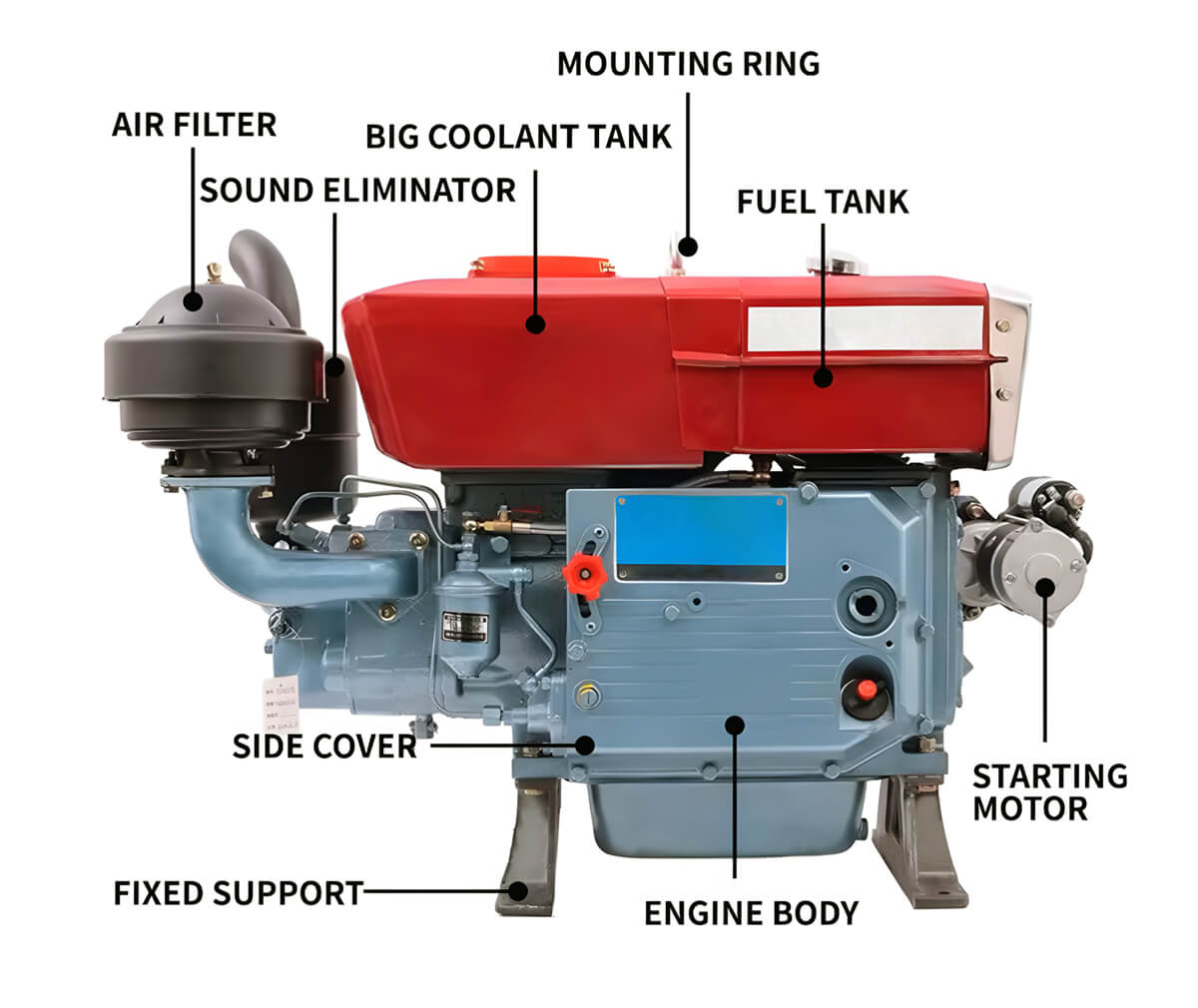
Key components of a water-cooled engine
A water-cooled engine relies on several essential components working together to regulate temperature, prevent overheating, and ensure stable, efficient operation. Each part plays a specific role in absorbing, transferring, and dissipating heat. Proper maintenance of these components is critical to keeping the cooling system effective and protecting the engine from heat-related damage.
Radiator
The radiator is the core heat exchanger of the cooling system. Hot coolant flows from the engine into the radiator, where it passes through narrow tubes surrounded by thin fins. Air moving across these fins removes heat from the coolant, cooling it before it returns to the engine. This process allows the engine to operate safely under varying loads and environmental conditions.
Coolant pump (water pump)
The coolant pump ensures continuous circulation of coolant throughout the engine and radiator. Typically driven by a belt or motor, it forces coolant to flow through the system, carrying heat away from high-temperature engine components. Without proper circulation, heat would quickly build up, leading to overheating and potential engine damage.
Thermostat
The thermostat acts as a temperature-controlled valve. When the engine is cold, it remains closed to help the engine warm up quickly. Once the engine reaches its ideal operating temperature, the thermostat opens and allows coolant to flow to the radiator. This regulation maintains stable engine temperature, improving efficiency and preventing overheating.
Cooling passages (water jackets)
Water jackets are hollow channels within the engine block and cylinder head. Coolant flows through these passages, absorbing heat directly from combustion areas and critical components. This is where most heat transfer occurs, making water jackets essential for temperature control and engine durability.
Fans and hoses
Cooling fans help draw air through the radiator, especially when the engine is running at low speeds or stationary. Hoses connect all cooling system components, allowing coolant to flow smoothly between the engine, radiator, pump, and reservoir. Together, they ensure proper airflow and coolant circulation.
Coolant reservoir (overflow tank)
The coolant reservoir provides extra space for coolant expansion as temperatures rise. It collects excess coolant when pressure increases and returns it to the system as the engine cools. This helps maintain correct pressure, prevents leaks, and reduces coolant loss. Coolant is typically replaced every 12 to 24 months, depending on operating conditions.
Coolant / antifreeze
Coolant is usually a mixture of water, antifreeze (such as ethylene glycol), and additives. Water absorbs heat efficiently, antifreeze raises the boiling point and lowers the freezing point, and additives protect against corrosion and scale buildup. Using a proper 50/50 mix of purified water and antifreeze is essential—plain water alone can cause corrosion and mineral deposits.
How a water-cooled engine works?
A water-cooled engine controls temperature by continuously circulating liquid coolant through the engine and releasing excess heat into the air through a radiator. This closed-loop system allows heat to be absorbed from the engine, transferred away efficiently, and then reused in a continuous cycle, keeping the engine within a safe and stable operating range. The cooling process works as follows:
- #1 Coolant circulation: A coolant pump moves liquid coolant through passages in the engine block and cylinder head. As the engine runs, the coolant absorbs heat generated by combustion and friction from moving parts.
- #2 Heat transfer to the radiator: Once heated, the coolant flows out of the engine and into the radiator. This carries excess heat away from critical engine components.
- #3 Air cooling process: As coolant passes through the radiator’s tubes and fins, air flowing through the radiator removes heat from the liquid. This airflow is created by vehicle movement or assisted by a cooling fan when needed.
- #4 Coolant recirculation: The cooled coolant then returns to the engine to absorb heat again. This continuous circulation maintains consistent engine temperatures, supports efficient combustion, and reduces thermal stress on components.
To maintain optimal performance, modern water-cooled engines use a thermostat to regulate coolant flow based on temperature. Many systems also incorporate electronic sensors and cooling fans that adjust cooling intensity according to engine load and environmental conditions. Together, these features ensure reliable operation, improved fuel efficiency, and reduced emissions across a wide range of working conditions.
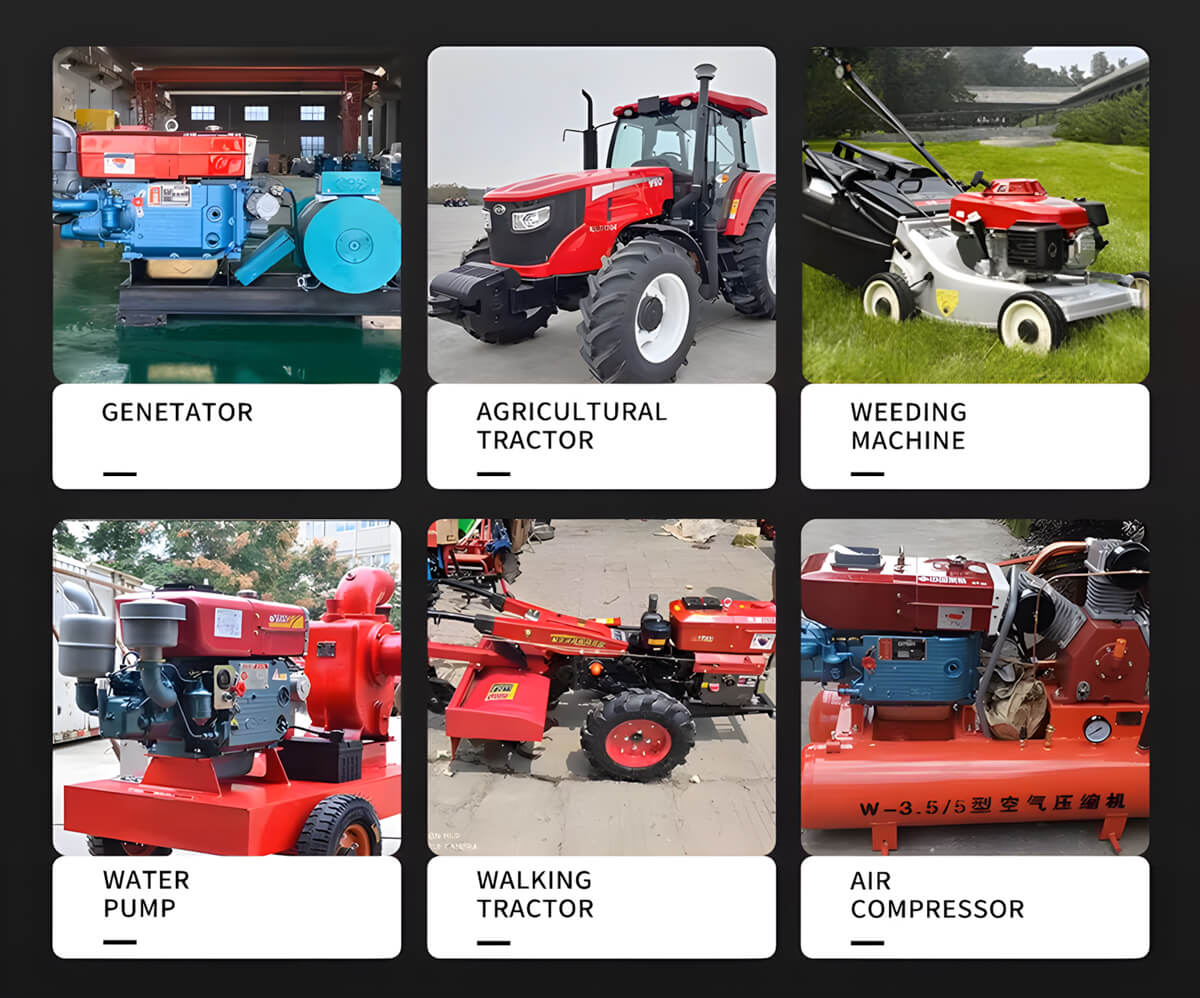
Applications of water-cooled engines
Thanks to their reliability, efficiency, and ability to manage high operating temperatures, water-cooled engines are widely used across many industries. Their stable temperature control makes them suitable for both continuous operation and high-load environments.
Automotive
Cars, trucks, and buses commonly use water-cooled engines for smooth and quiet operation. Stable temperature control supports higher power output, improves fuel efficiency, reduces emissions, and minimizes wear on engine components, making them ideal for daily transportation and long-distance travel.
Industrial equipment
Heavy-duty machinery such as excavators, compressors, cranes, and construction equipment depends on water-cooled engines to operate continuously under heavy loads. Water cooling keeps temperatures stable during long working hours, ensuring reliability and reducing the risk of overheating in demanding industrial environments.
Power generation
Water-cooled engines are widely used in generators, especially for continuous or high-output power generation. Effective cooling allows generators to maintain stable performance during extended operation, which is essential for industrial facilities, backup power systems, and remote locations.
Marine applications
Boats and ships rely on water-cooled engines for precise temperature control in challenging marine conditions. These systems prevent overheating at sustained speeds, reduce engine noise, and improve overall performance and comfort on the water.
Agriculture
Agricultural machinery such as tractors and harvesters benefits from water-cooled engines that can handle long operating hours in hot, dusty, and harsh field conditions. Consistent cooling helps maintain engine efficiency and durability throughout intensive farming operations.
Choosing the right water-cooled engine
Selecting the right water-cooled engine is a crucial decision that directly affects equipment performance, operating efficiency, and service life. Whether the engine is used for power generation, marine propulsion, or heavy machinery, choosing a model that matches your specific requirements ensures long-term reliability and cost-effective operation. Below are the key factors to consider when choosing a water-cooled engine:
Power output and application
Start by defining your power requirements based on load and operating conditions. Engines are rated in horsepower (HP) or kilowatts (kW), and selecting the correct size prevents both underperformance and unnecessary fuel consumption. Different applications, such as generators or marine equipment, have unique output characteristics. Choosing an engine with a small margin above peak load helps improve efficiency and extend engine life.
Engine type and fuel selection
Water-cooled engines are commonly available in diesel and gasoline options. Diesel engines are ideal for heavy-duty and continuous applications due to their high torque and fuel efficiency, while gasoline engines are better suited for lighter-duty or portable equipment. Fuel availability and operating costs in your region should also be considered.
Cooling system design
Ensure the cooling system is designed for your operating environment. Engines used in hot or humid conditions benefit from larger radiators and higher coolant capacity. For marine applications, heat exchanger cooling systems may be more appropriate than traditional radiator-based designs.
Performance and emission standards
Modern water-cooled engines are engineered to meet fuel efficiency and environmental regulations. Check compliance with relevant standards such as Tier 3, Tier 4, or Euro V, depending on your market. Meeting these standards helps reduce emissions, improve efficiency, and lower long-term operating costs.
Size, weight, and mounting requirements
Confirm that the engine’s dimensions, weight, and mounting configuration are compatible with your equipment. Space limitations can affect cooling efficiency and maintenance access. Compact and lightweight engines are preferred for mobile machinery, while stationary systems can accommodate larger, higher-output engines.
Serviceability and spare parts availability
Select an engine from a reputable manufacturer that provides reliable after-sales support, technical documentation, and readily available spare parts. Easy maintenance and quick access to components reduce downtime and improve overall operational efficiency.
Reliability and brand reputation
Choose a manufacturer with a proven track record for quality and durability. Well-established brands typically perform rigorous testing to ensure consistent performance and long-term reliability.
Customization options
Some manufacturers offer customized solutions to meet specific operational needs. Options such as tailored cooling systems, specific power outputs, or custom mounting configurations can improve compatibility and overall system performance.
Budget and total cost of ownership
While the initial purchase price is important, long-term costs such as fuel consumption, maintenance frequency, and service life should also be considered. Investing in a high-quality engine often results in lower total ownership costs over time.
Warranty and technical support
Review the warranty coverage carefully. A strong warranty reflects confidence in product quality and should cover critical components such as the cylinder head, water pump, and radiator. Reliable technical support and service agreements provide added assurance and long-term value.
Conclusion
Water-cooling systems are vital for keeping modern engines reliable, efficient, and durable. By effectively managing the intense heat generated during combustion, they protect engine components, improve performance, and ensure safe operation across a wide range of conditions.
Advancements such as electric water pumps and improved coolant formulations continue to enhance the efficiency and effectiveness of water-cooled engines. These innovations provide better temperature control, higher fuel efficiency, and longer engine life, meeting the evolving demands of modern machinery.
Though often unseen, water cooling plays a crucial role in every engine, quietly safeguarding performance while supporting smooth, powerful operation. For businesses or individuals seeking dependable, high-quality water-cooled engines, BISON offers professional-grade solutions designed for reliability, efficiency, and long-term performance.
Explore our range today and experience the benefits of expertly engineered water-cooled engines from BISON. Contact us to find the perfect engine tailored to your needs.
