.png.avif)
How do I import a generator from China?
- By BISON
Table of Contents
Importing generators from China has become a practical choice for businesses, resellers, and contractors seeking cost-effective solutions without sacrificing reliability. China’s manufacturing sector offers a wide range of options, from small portable units to large industrial diesel engines. While the opportunity is promising, the process requires patience, careful assessment, and a proper understanding of international trade measures.
Most guides on this topic are written by freight forwarders or sourcing platforms. This one is written by us — BISON, a generator manufacturer based in China with over 10 years of OEM and export experience serving distributors across 80 countries.
That distinction matters. We know exactly what questions buyers ask before placing their first order, because we answer them every week. We also know where imports go wrong — because we’ve seen it firsthand from the factory side.
This guide walks you through the complete process: from choosing the right generator type and vetting a supplier, to navigating certifications, shipping, and customs clearance. Whether you’re placing a first trial order or scaling up to full container loads, the steps below reflect how reliable, experienced importers do it.
Want to skip ahead and talk to a manufacturer directly? → contact us

Understanding generator types
Generators come in various categories, and choosing the right fuel type ensures the machine matches its intended use. Cost, availability, maintenance, and long-term performance are all affected by fuel choice. Chinese manufacturers produce a wide range, from basic gasoline generators for home use to high-capacity diesel units for industrial applications.
Diesel generators
Diesel generators are suited for industrial sites, construction, and factory backup, delivering reliable performance under heavy loads. Buyers import units ranging from 10 kVA to 2000 kVA. Chinese factories in Guangdong and Jiangsu produce durable models with robust components, making them suitable for large-scale B2B resale. Power output is measured in kVA and kW, and efficient models consume about 0.2 liters per kWh. Many units use water-cooled blocks from Weichai or licensed Ricardo designs.
Gasoline and portable generators
Gasoline generators are commonly used by homeowners and small businesses for outages, tools, and lighting. Portable models under 50 kg are suited for retail, while standby units provide automatic backup power.
Natural gas and dual-fuel generators
Demand is increasing for clean-burning natural gas and dual-fuel generators that switch between gas and propane. Chinese factories supply these units to North American and European B2B buyers seeking flexible fuel options.
Solar and hybrid generators
Solar generators charge via panels for off-grid use, while hybrid systems combine solar, battery, and fuel backups. Export volumes from Shenzhen hubs are growing as importers target eco-conscious markets to reduce fuel costs.
Inverter generators
Inverter generators provide clean sine wave output for sensitive electronics such as computers and medical devices. They offer higher fuel efficiency and low harmonic distortion, making them suitable for premium residential markets.
Learn about legal restrictions and compliance requirements
Each country enforces its own regulations for generator safety, emissions, and noise. Understanding these laws helps prevent import delays and ensures that the generator is legally compliant for use. Reviewing these requirements in advance allows you to choose an appropriate model.
Emissions standards
Different countries apply different emissions regulations depending on fuel type and generator size. Importing a non-compliant unit may make it illegal to operate and can lead to recalls or required modifications.
Noise level requirements
Residential and urban areas may enforce strict noise limits. Choosing a generator with proper soundproofing helps avoid fines and improves community acceptance.
Safety certifications
Certifications confirm that electrical and mechanical components meet required safety standards. Ensuring the generator has the correct markings helps prevent issues during customs inspection.
Generators must meet safety, emissions, and noise standards depending on the destination country. Compliance ensures legal use and avoids restrictions.
Determine key specifications to consider across all types
Calculate total wattage by summing running and starting surge loads of all equipment. Select a kW or kVA rating that exceeds peak demand.
- Power output: Defines capacity in kVA or kW to match load requirements. Residential users may only need small units, while businesses require higher-capacity generators. Accurate load calculation prevents overload, underperformance, and premature wear.
- Voltage and frequency: Match voltage and frequency to your country’s grid. The US typically uses 60 Hz, while Europe and many parts of Africa use 50 Hz. Units must match 120/240V or 230/400V standards to avoid rewiring costs.
- Phase type: Choose single-phase power for residential use or three-phase power for industrial equipment based on electrical requirements. Industrial generators support continuous duty cycles, while residential units focus on quieter operation and limited runtime.
- Engine type: Includes air-cooled gasoline or diesel engines from tier-one suppliers. Many Chinese generators use components from brands such as Cummins, Perkins, Stamford, or SDEC, which improve reliability and service life.
- Fuel consumption: Measured in liters per hour; lower consumption reduces operating costs.
- Noise level: Typically kept under 70 dB for residential and urban use.
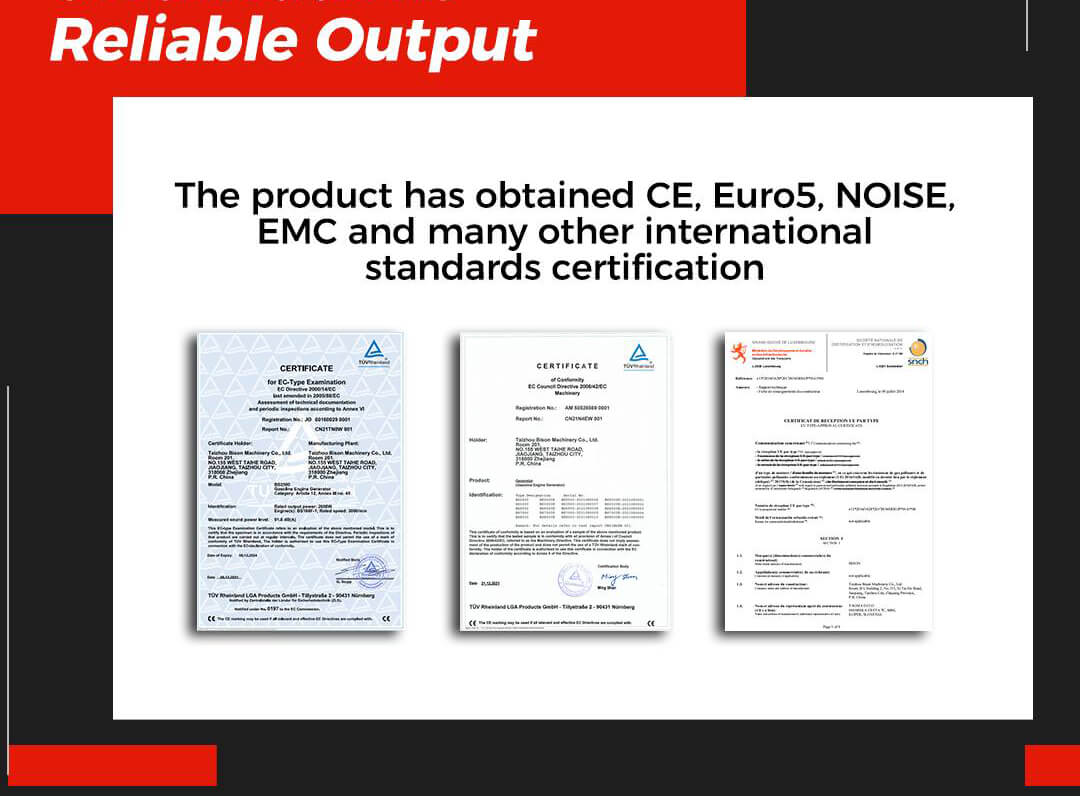
- Certifications: Verify CE, ISO, EPA, or CARB compliance before shipment.
Requesting technical data sheets and performance test videos helps reduce risk and improve purchasing decisions.
Finding reliable suppliers in China
Alibaba Trade Assurance, Made-in-China verified supplier badges, and direct factory RFQs are the most effective channels for sourcing generators from Chinese manufacturers at volume pricing. If you’re sourcing gasoline, diesel, or inverter generators specifically, BISON’s export team handles direct RFQs — you can also contact us via the platforms below.
Online B2B sourcing platforms
Search Alibaba for specific specifications such as “diesel standby generator 50kW” and filter by Trade Assurance to streamline sourcing through a trusted supplier channel. Request quotes from multiple suppliers to compare pricing.
Made-in-China connects buyers directly with manufacturers. Filter for verified supplier badges after platform audits and submit RFQs to receive competitive bids. Prioritize suppliers with proven U.S. or EU export experience.
When buying from Chinese suppliers, always filter platforms by Trade Assurance, verified status, and transaction history to reduce risk.
- Trade Assurance: Offers payment protection for non-delivery.
- Verified status: Confirms factory audits and legitimacy.
- High transaction volumes: Often indicate established B2B buyers.
Vetting suppliers includes video calls for live factory tours, requesting product samples before bulk orders, and cross-checking supplier names through China Customs data sources.
Trade fairs and exhibitions
The Canton Fair in Guangzhou is a major venue for finding generator exhibitors and comparing catalogs directly. The Shanghai International Power Exhibition is another key event for networking with OEMs offering diesel and gas generator systems. In-person trade fairs help reduce communication barriers and allow importers to negotiate better minimum order quantities and pricing through direct trust building.
Direct sourcing vs hiring a sourcing agent
Direct sourcing offers cost savings by communicating with factory sales teams and negotiating directly, often reducing prices by 10–20%. Sourcing agents handle supplier vetting and logistics, including factory visits. They typically charge 5–10% commission on order value, with some fees ranging from 3–8% plus expenses. Agents can be found via LinkedIn or specialized platforms, and should always be verified through references.
Manufacturers often provide better customization options, while trading companies offer easier communication and a wider product range. Understanding who you are dealing with helps improve negotiation and set realistic expectations.
Evaluating supplier credibility
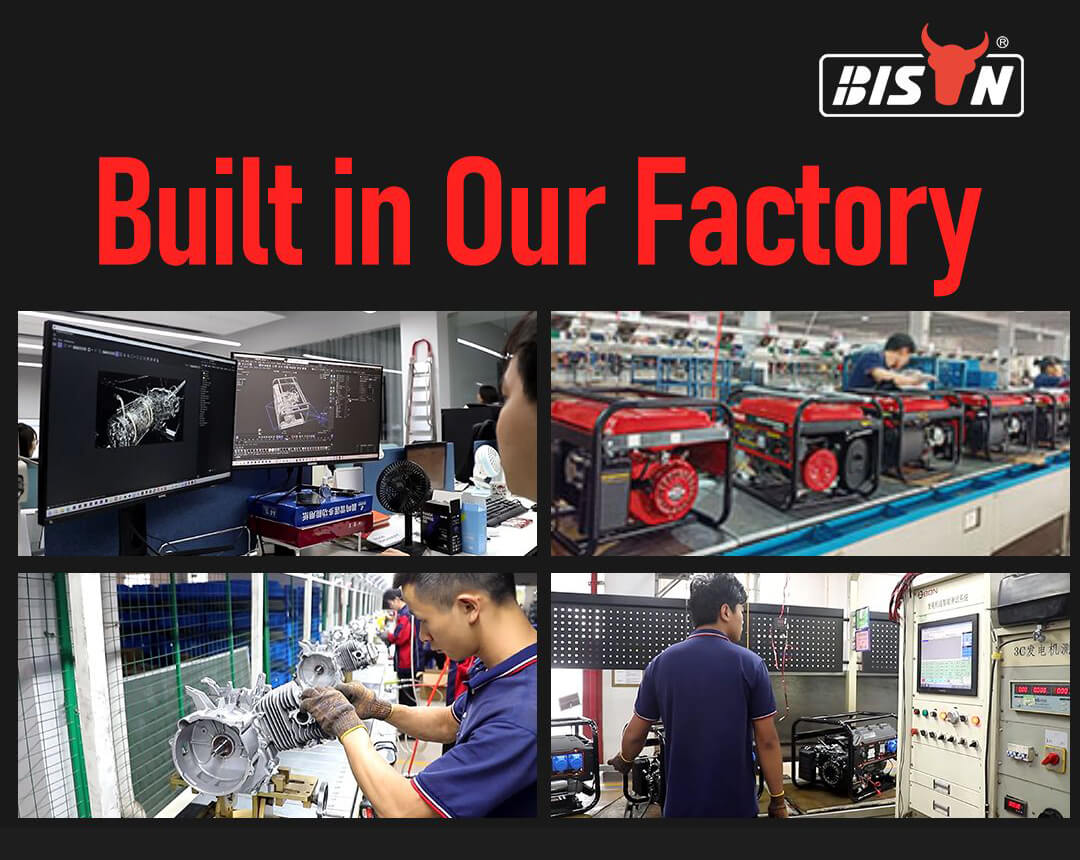
There are many generator factories and trading companies in China, but quality, testing standards, and after-sales support vary widely. Before committing financially, conduct background checks including business license verification, production experience, brand reputation, and export history. Reliable suppliers provide certifications, factory photos, and references.
- Business licenses and export qualifications: Request business licenses through supplier portals and confirm export qualifications via China’s Ministry of Commerce database.
- ISO certifications: Verify ISO 9001 and ISO 14001 certifications during audits to ensure quality and environmental compliance.
- Client references and shipment history: Ask for client references from U.S. wholesalers and review shipment history logs.
- Third-party inspections: SGS or Bureau Veritas can conduct factory audits, typically costing $300–500 per visit and providing detailed compliance reports.
- National Enterprise Credit Information Publicity System: Cross-check suppliers through China’s national database and reject unverified entities.
- Customer reviews and references: Check customer reviews on B2B platforms and verify references directly before placing orders.
Requesting samples, quotations, and technical documentation
Once you have shortlisted a few suppliers, the next step is to collect accurate quotations, verify product quality beyond online listings, and establish clear communication to prevent misunderstandings and set expectations.
Requesting a detailed quotation
A complete quotation should include generator specifications, unit price, minimum order quantity, packaging details, warranty terms, and available shipping methods. Avoid quotes that omit essential information, as vague pricing may lead to hidden charges.
Write an effective RFQ (request for quotation) by listing exact specifications first, including power output, fuel type, dimensions, and certifications such as CE or EPA. Request FOB, CIF, and EXW pricing, then compare these terms to determine the most suitable option.
- Total landed cost: Analyze unit price against total landed cost, including duties, freight, and insurance, since low unit prices may hide higher logistics fees.
- Accessories, spare parts, and documentation: Evaluate accessories, spare parts, and documentation, and confirm that manuals, certificates, and filters are included to avoid additional post-import costs.
Requesting certifications
Different markets require different certifications. Europe may require CE marking, while other regions may require ISO standards or emissions approvals. Request these documents in advance to ensure smooth customs clearance and compliance with international safety standards.
| Region | Certification / standard | Notes |
|---|---|---|
| United States | EPA certification | Required for gasoline generators; verify labels match test reports. |
| California (USA) | CARB approval | Required for sales in California specifically. |
| Europe | CE marking | Confirm compliance with low-voltage and EMC directives. |
| Canada | CSA | Regional standard required for market entry. |
| Australia | SAA | Regional standard required for market entry. |
| Nigeria | SONCAP | Regional standard required for market entry. |
| India | BIS | Regional standard required for market entry. |
Prioritize emission standards and ensure compliance with Euro Stage V or EPA Tier 4. Review environmental test data for particulates and NOx. Request all test reports and certificates upfront and cross-check them with issuing authorities. Decline orders if documents are invalid or incomplete.
Requesting samples and testing
Order samples early to evaluate them against your specifications and identify defects before bulk production. Conduct performance testing, including load simulations and noise checks, to assess reliability. Inspect welds, wiring, and paint finish on sample units and document any defects for negotiation before bulk orders. Request pre-production and golden samples for approval based on exact specifications.
After supplier vetting and negotiation, request a sample unit before production begins. Pay for shipping and duties. Test the sample under real-world conditions by inspecting durability and verifying dimensions.
- Bench test power output: Test at 50%, 75%, and 100% load, and record voltage and frequency stability.
- Measure fuel efficiency: Run the unit continuously for 8 hours and calculate consumption per kWh.
- Measure noise levels: Use a sound meter at 7 meters and compare results to target decibels. Reject the sample if it fails any test.
Negotiating price, payment terms, and manufacturing conditions
Negotiation is an essential part of the import process. Chinese suppliers expect buyers to negotiate, but the goal is to reach a win-win agreement rather than settle for unrealistically low prices.
Price negotiation strategy
Instead of immediately asking for lower prices, negotiate order size, packaging, and long-term cooperation. Suppliers are more likely to offer concessions when they see potential for repeat business, helping build stronger relationships and improve after-sales support.
- MOQ flexibility: Start negotiations at 50% below the minimum order quantity to reduce entry barriers for first orders.
- Multiple quotations: Compare suppliers and encourage competitive pricing, which can significantly reduce overall generator costs.
- Warranty and after-sales terms: Request 12–24 months of coverage and remote support, and test supplier response times before finalizing agreements.
Secure payment methods
Most suppliers accept bank transfers, Alibaba Trade Assurance, or letters of credit. Large orders typically follow a deposit-and-balance system, such as 30% upfront and 70% before shipment. Using secure payment channels helps prevent fraud and ensures transaction transparency.
Recommended payment terms: Negotiate options such as T/T 30/70, L/C for security, or Alibaba Trade Assurance escrow.
Confirming delivery time
Generators require time for assembly, testing, and quality assurance. Establishing a clear production timeline helps avoid unexpected delays and ensures smooth project scheduling. Confirm deadlines in advance and agree on penalties for late delivery to hold both parties accountable.
Arrange quality control and pre-shipment inspection
Quality control is one of the most critical steps when importing machinery. A generator has multiple engine components, electrical systems, and safety mechanisms that must be thoroughly inspected before shipping.
Factory audit and inspection
Schedule a pre-production factory visit, either in person or through a remote video audit. Observe assembly lines and worker training to verify production standards and consistency.
Hire third-party inspectors
Professional inspection agencies can examine wiring, voltage output, engine stability, noise levels, and overall build quality to reduce the risk of receiving defective or poorly assembled units.
Hire third-party inspection companies to conduct pre-production checks for tooling setup, during-production visits for initial runs, and pre-shipment inspections for full batches. Services such as SGS, TÜV, and local Chinese inspection providers can perform detailed evaluations.
Testing operational performance
Generators must be tested under load conditions. This includes starting the unit, checking oil pressure, verifying voltage stability, and monitoring temperature. Suppliers should provide test reports or video evidence confirming performance compliance.
Inspect key quality checkpoints, including:
- Engine brand authenticity: Verified through serial numbers.
- Alternator winding insulation resistance: Checked for electrical integrity.
- Control panel functionality: Confirmed for correct operation.
- Wiring security and heat resistance: Inspected for safe installation.
- Paint finish consistency: Assessed alongside rust protection quality.
Ensuring proper packaging
Transporting generators overseas requires strong packaging to prevent damage. This includes wooden crates, shock-absorbing materials, and moisture-proof coverings.
- Reinforced crating: Crate heavy generators in reinforced plywood over steel frames and secure them with steel banding.
- ISPM 15 compliance: Ensure wooden packaging is fumigated per ISPM 15 standards, with proper stamping to avoid port rejection.
- Loading plans: Develop loading plans with supplier photos to ensure stable stacking and reduced vibration damage.
- Moisture protection: Use IP54-rated enclosures and desiccant packs to protect electronics from moisture.
Navigating shipping and logistics
Shipping is often the most complex step in importing because it involves multiple parties, documentation, and transportation choices. Selecting the proper logistics method helps control costs and ensures the generator arrives safely. FCL ocean freight under FOB terms is typically the most cost-effective option for bulk generator imports, with transit times of 18–35 days depending on destination port.
Choosing a shipping method
- Full Container Load (FCL): Dedicates a 20-foot or 40-foot container to a single order, reducing handling damage and lowering per-unit freight costs for shipments over 10–15 tons.
- Less than Container Load (LCL): Suitable for shipments under 5 tons, but it adds 7–10 days due to consolidation requirements.
- Sea freight: The most common option for generators due to their weight, typically costing $2,000–$5,000 per 20-foot container with 20–40 day transit times.
- Air freight: Faster but significantly more expensive, generally used for urgent or lightweight shipments; best for loads up to 1 ton at $5–$10 per kg with 3–7 day delivery.
- Express shipping: Best for spare parts under 150 kg.
- Rail freight: Offers 12–18 day transit to Europe via the New Silk Road.
Understanding Incoterms
Incoterms define the responsibilities of buyers and sellers, including transportation, insurance, port charges, and customs documentation.
| Incoterm | Description |
|---|---|
| EXW (Ex Works) | Buyer assumes all costs and risks from the factory gate, including export clearance in China. |
| FOB (Free on Board) | Seller handles domestic logistics in China; buyer manages ocean freight and import duties. |
| CIF (Cost, Insurance, and Freight) | Seller covers shipping and insurance to the destination port, while risk transfers once goods are loaded. |
EXW offers the lowest upfront price but requires full logistics control, while CIF simplifies the process at a higher cost.
Working with a freight forwarder and customs broker
A reliable freight forwarder manages customs paperwork, port handling, and delivery to the warehouse, simplifying the import process and reducing delays. Select forwarders with at least five years of experience in industrial generator imports. Forwarders arrange vessel bookings, while customs brokers handle documentation and HS code classification such as 8502.11. Door-to-door services provide smoother B2B operations, while consolidation services can reduce LCL costs by 15–25%.
Cargo insurance
Marine insurance protects high-value shipments against theft, damage, and moisture. All-risk policies offer the most comprehensive coverage. Claims should be filed with photos and surveyor reports within 24 hours of damage detection.
Customs clearance and import regulations
Customs clearance can make or break your import experience. A poorly prepared shipment can result in delays, fines, or even confiscation.
Research your country’s import rules for generators
Generators fall under HS codes 8502.11 through 8502.39. Classify your model precisely by power output and fuel type. Understanding import regulations requires accessing customs databases to retrieve tariff rates and verifying import permits early, as some nations prohibit diesel models exceeding emission limits.
Required documentation for customs clearance
- Commercial invoice: details value, quantity, and description.
- Packing list: lists contents, weights, and dimensions.
- Bill of lading or airway bill: for air freight.
- Certificate of origin: confirms Chinese manufacture.
- Compliance certificates: CE, RoHS, or local test reports.
- Insurance certificate: proves coverage against transit risks.
Proper paperwork ensures smooth customs processing.
Import duties and taxes
Different countries impose different duty rates on generator imports. Some regions offer tax exemptions for renewable or low-emission generators. Knowing these rates in advance helps calculate the actual landed cost of your shipment.
Tariffs are calculated on CIF value using HS-specific rates, then VAT, GST, or sales tax is added. Generators may face anti-dumping duties in some regions, which can significantly increase total costs.
Compliance with local regulations
- Safety: North America requires UL or CSA marks.
- Emissions: must comply with EPA Tier 4 or Euro Stage V limits.
- Bans: some regions restrict portable units without auto-shutoff.
Hiring a customs broker
A licensed broker can navigate filings and reduce clearance time to 1–3 days. They help avoid penalties from documentation errors. Provide all required documents, including HS codes, before arrival.
Customs clearance process
- Submit entry via broker 48 hours pre-arrival.
- Pay duties for electronic release.
- Customs officers may inspect documents and samples; mismatched HS codes or incomplete packing lists can cause delays or additional examinations.
Last-mile delivery and receiving
Arrange inland trucking from the port to your warehouse. Inspect goods upon receipt for dents or leaks and document any damage with photos before signing. File carrier claims within 7 days for reimbursement.
Quality control and post-import procedures
Your import responsibility does not end once the generator arrives.
Receiving and inspecting goods
Examine crates immediately upon arrival for dents, cracks, or moisture damage. Photograph any issues right away and file claims with carriers within 48 hours. Count every unit against the bill of lading and cross-check model numbers and serials with the purchase order. Reject any mismatches on the spot.
Installation and commissioning
Larger generators require certified electricians for installation, including grounding and fuel connections, to ensure safety and maintain warranty validity. Run initial no-load tests first, then gradually apply full load while monitoring voltage stability and exhaust. Follow supplier manuals and document results for warranty claims.
Warranty and after-sales support
Manufacturers typically offer 12–24 month warranties on core components, with exclusions such as overload damage. Review terms carefully and negotiate extensions when possible. Source spare parts directly from suppliers and keep essential items like filters and belts in stock. Remote technical assistance via video calls can help reduce downtime. Maintaining strong supplier relationships through repeat orders can improve support and service priority.
Resale compliance and labeling
Apply local labels for resale markets, including safety warnings and required certifications such as CE or UL equivalents. Ensure all symbols comply with regulations and prepare stickers before shipment when possible. Secure product liability insurance and consult legal experts on resale requirements. Register generators with relevant authorities such as the EPA or local energy agencies and submit required test reports to ensure compliance and avoid sales interruptions.
Planning for after-sales service and parts availability
Generators require ongoing maintenance and occasional parts replacement. Planning for after-sales support protects your investment and ensures long-term efficiency. A strong after-sales plan ensures durability and long-term satisfaction.
Establishing a spare parts supply
Engines, alternators, filters, and starters should be readily available. Choosing generators with standard or globally recognized components reduces downtime and simplifies repairs.
Training technicians or end users
Generators require technical knowledge for proper operation and maintenance. Proper training for technicians or users helps prevent avoidable failures and extends equipment lifespan.
Ensuring supplier support
Working with suppliers that provide video guidance, troubleshooting assistance, part replacement, and long-term support makes maintenance more efficient and reliable.
Cost analysis and budgeting
Total landed cost for imported generators includes unit price, ocean freight, marine insurance, import duties, customs broker fees, and last-mile delivery, typically adding 25–40% above ex-factory price.
Breakdown of import costs
Product cost forms the largest share. Generator unit prices vary by type and capacity, with diesel models generally costing more than gasoline units. Higher kW ratings significantly increase pricing. Bulk orders can reduce costs by 20–30% for large quantities.
Shipping and insurance must also be included. Account for FOB or CIF terms and insure shipments at 110% of invoice value to cover potential damage during transit.
- Customs clearance fees: Typically include broker charges ranging from $300–800 per shipment, depending on complexity and service provider.
- Local transportation: Freight from the port to the warehouse may add $200–500 per full container, depending on distance and logistics requirements.
- Contingency budgeting: Unexpected costs can add 10–15% to total expenses due to delays or adjustments.
Hidden costs to anticipate
- Bank transfer fees: May account for 0.5–1% of payments.
- Third-party inspection fees: Typically range from $250–400 per visit.
- Storage and demurrage charges: Can add $100–200 per day per container if clearance is delayed.
Typical cost structure
| Item | Details | Estimated cost |
|---|---|---|
| Entry-level 5kW diesel generator | Per unit | $800–$1,200 |
| Mid-range 20kW generator | Per unit | $2,500–$3,500 |
| Sea freight, Shanghai to United States (20ft container) | Per container | $2,500–$4,000 |
| Sea freight, Shanghai to United States (40ft container) | Per container | $4,000–$6,500 |
| Sea freight, Shanghai to Europe | Per container (additional over US routes) | $500–$1,000 more |
Mistakes to avoid when you import generator from China
Skipping factory audits, underestimating landed costs, ignoring certification requirements, and ordering without pre-shipment inspection are among the most expensive mistakes B2B buyers make when importing generators from China. Recognizing these issues early helps streamline the import process and reduce risk.
Choosing the cheapest supplier without verifying quality
Importers often select the lowest quote without proper supplier vetting, leading to product failures within months. Prioritize audited suppliers over price alone. Request factory videos, verify serial numbers, and ensure engines and components meet specifications. Lower material quality, weak warranty support, and untested designs often result in higher long-term costs.
Skipping third-party inspections
Cost-cutting buyers sometimes bypass inspections, which increases the risk of receiving defective units. Third-party pre-shipment inspections help identify wiring issues, component defects, and assembly problems before shipping, preventing costly repairs and replacements.
Ignoring emission and safety certification requirements
Failing to check compliance with standards such as EPA Tier 4, CE marking, ISO 8528, or UL listings can result in customs rejection or seizure. Always confirm certification requirements before ordering.
Underestimating total landed costs
Focusing only on ex-factory price leads to budget miscalculations. Total landed costs include duties, ocean freight, handling fees, and other import charges, which can significantly increase the final cost.
Failing to clarify payment terms and using insecure payment methods
Using full upfront telegraphic transfers increases financial risk. Clear payment terms such as partial deposits with balance on bill of lading or secure escrow arrangements help protect bulk transactions.
Not confirming voltage and frequency compatibility before ordering
Ordering generators without matching local voltage and frequency standards can cause system failure. Always specify electrical requirements during the request for quotation stage.
Overlooking intellectual property and branding issues
Accepting OEM products without securing branding rights can lead to trademark disputes and sales restrictions. Ensure private labeling agreements and brand registration are completed before production.
Misunderstanding shipping terms
Incorrect interpretation of Incoterms can lead to unexpected costs and disputes over insurance, customs clearance, and logistics responsibilities. Clarify shipping terms before finalizing orders.
Summary
Making the strategic decision to import generators from China can yield cost savings, expanded business opportunities, and access to a wide range of high-performance equipment. The process becomes smoother and more predictable when you follow a systematic approach, starting with supplier research, selecting the right generator type, negotiating fairly, arranging inspections, and complying with customs regulations. Each step helps ensure you receive a safe, durable, and cost-effective generator that meets your needs.
Ready to Import? Talk to the Manufacturer Directly.
BISON supplies diesel, gasoline, and inverter generators to distributors, wholesalers, and contractors across North America, Europe, Africa, and Southeast Asia. We offer:
- CE, EPA, CARB, ISO 9001 certified models
- OEM / private label options with custom branding
- MOQ from 20 unit(s) for trial orders
- Full export documentation and pre-shipment inspection support
FAQs
Is it safe to import generators from China?
Yes, it is safe as long as you work with verified suppliers, arrange proper inspections, and use secure payment methods.
How long does shipping typically take?
Ocean freight typically takes three to six weeks depending on the destination, while air freight can take less than a week.
Typical timeline from order to delivery
Production lead time ranges from 15–45 days. Standard units may ship in about 15 days, while custom builds can take up to 45 days.
Shipping transit time varies by route: Asia to North America takes 20–30 days, Europe takes 25–35 days, and Africa takes 30–45 days.
Overall, the total import timeline generally ranges from 8 to 12 weeks, depending on whether the order is standard or custom.
What is the minimum order quantity for generators?
Many suppliers accept single-unit orders, but bulk purchases usually provide better pricing.
Can I customize the generator?
Yes, most manufacturers offer customization options, including branding, color, engine type, and control panel features.
Related Posts
Are Chinese generators any good?
Home / News / Table of Contents Generators are a critical power infrastructure investment for distributors, importers, and project buyers

air-cooled vs. liquid-cooled generators
Air-cooled vs. liquid-cooled generators: Discover which system provides better cooling, performance, and reliability for your home or business.

How do you clean generator fuel injectors
BISON will guide you through three effective ways to clean generator injectors, so you can restore performance and keep your generator running at its best.
generator maintenance checklist
This guide outlines a complete generator maintenance checklist, showing what to check at regular intervals. Following this systematic checklist ensures your generator runs reliably
Related Products
2kva silent smallest diesel generator
2kva silent smallest diesel generator has an intelligent system: it automatically starts when the power

inverter generator for home use
The BISON BS-S2000ie portable inverter generator is the perfect solution for home backup power. It
lightweight silent gasoline inverter generator
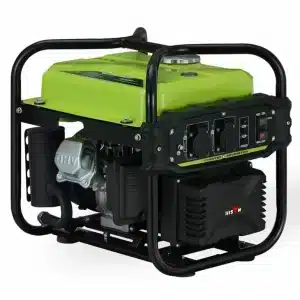
Ultra-quiet, lightweight, and powerful: introducing the BISON BS-Q2000ix gasoline inverter generator Imagine the convenience of

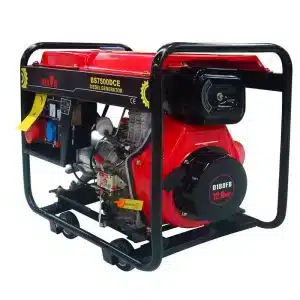
big power diesel electric generator
BISON BS9500DCE is a commercial-grade diesel electric generator that delivers big power when you need