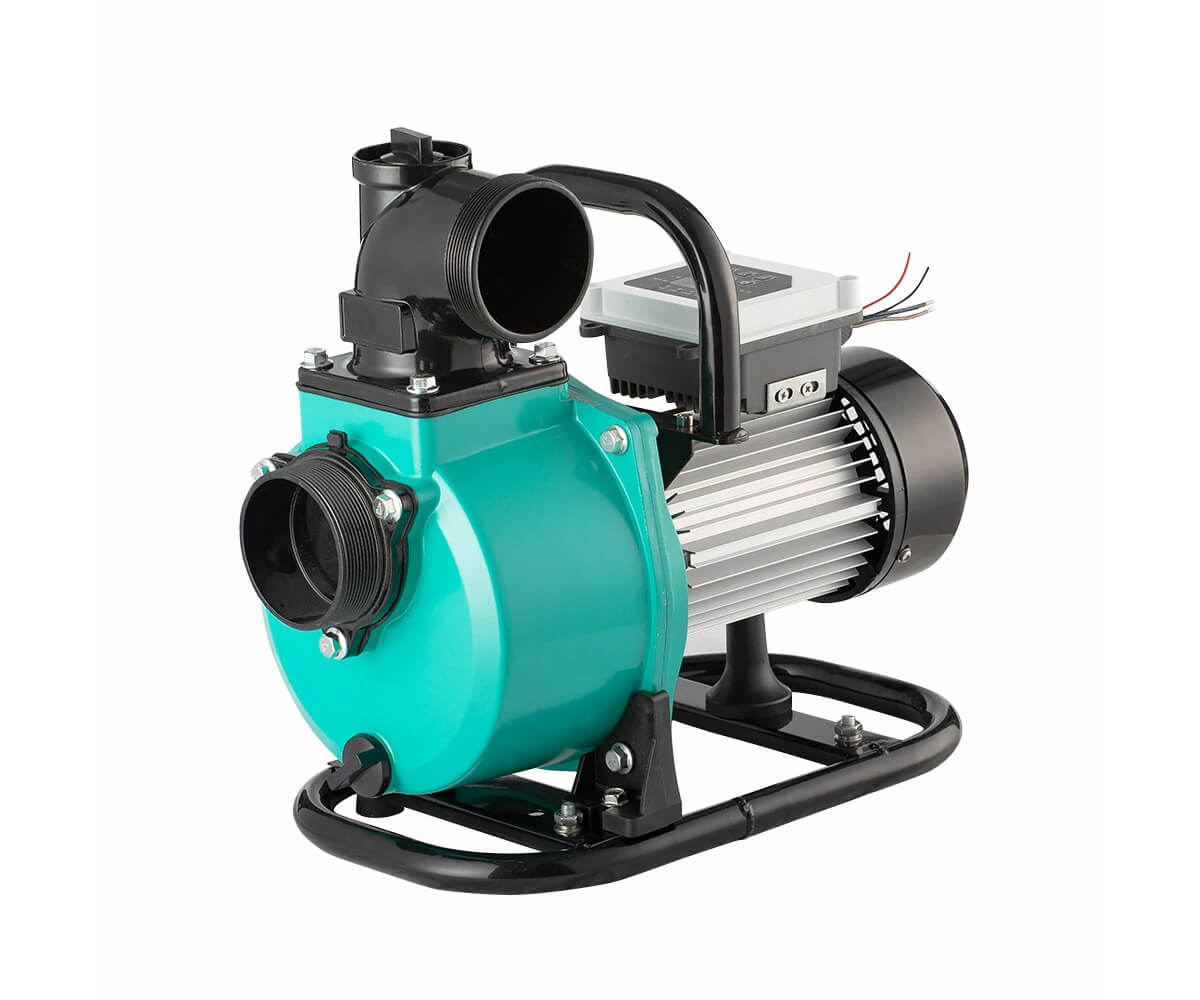
Irrigation is vital to modern farming—it improves crop yields, extends growing seasons, and supports food security. In agriculture, water pumps are essential for delivering water to crops, especially in areas with insufficient rainfall. These devices use mechanical force to move liquids by increasing pressure, allowing water to flow from sources like rivers, wells, or reservoirs to the fields.
Usually made from durable metals like stainless steel or nickel alloys, pumps can be powered manually, electrically, or by air. Different types are available to suit specific irrigation needs.
In this article, BISON will explore the most common types of irrigation pumps—centrifugal, submersible, turbine, and diaphragm. You’ll learn how each works, their advantages, and the conditions they’re best suited for. This will help you choose the right pump to optimize your irrigation system and boost farm productivity.
Types of pumps in the agriculture sector
Irrigation pumps are vital in agriculture, used to move water from sources like rivers, reservoirs, wells, or ponds to crop fields. They provide the pressure and flow needed to distribute water efficiently through irrigation systems.
Irrigation pumps come in various types, each suited to specific farm needs and conditions. Below are five main types of agricultural pumps, along with their working principles, key applications, and the pros and cons of each.
Positive displacement pump
It use mechanical force to move a fixed amount of water by trapping it in a chamber and pushing it out at high pressure. They operate through a suction and discharge process—drawing water in through one valve and forcing it out through another. These pumps deliver a consistent flow regardless of pressure changes, making them ideal for precise irrigation tasks.
Due to their ability to handle high pressures, positive displacement pumps often require a safety valve. Though they are commonly used in smaller-scale or high-pressure systems—like drip irrigation—they are usually manually operated and not suitable for drawing water from deep sources. Their ability to handle viscous fluids or water with some debris also makes them a practical option in various farming conditions.
Advantages of positive displacement pumps
- Deliver high-pressure output
- Maintain consistent flow despite pressure changes
- Handle fluids with high or low viscosity
- Tolerate air or gas contamination in liquid flow
- High efficiency in small-scale or targeted irrigation (e.g., drip systems)
- Can handle water with suspended particles
- Durable and relatively affordable
Disadvantages
- Limited to low flow rates and smaller setups
- May be more expensive to maintain over time
- Susceptible to wear if pumping debris-filled water
Applications
Positive displacement pumps are used across agriculture and other industries for tasks such as:
- Delivering water to irrigated fields at high altitudes
- Precision irrigation systems like drip irrigation
- Transferring oils, paints, and other viscous fluids
- High-pressure fluid transport in pipelines (e.g., oil or gas)
- Chemical processing, where they handle corrosive or abrasive fluids
- Moving sludge or waste in sewage systems due to their ability to handle thick or solid-laden fluids
Centrifugal pumps
These are widely used in agriculture, particularly for irrigation in large-scale farming operations. They use a rotating impeller to generate centrifugal force, drawing water in through the inlet and pushing it out through the outlet. This motion increases the water’s velocity and pressure, making these pumps ideal for transferring large volumes of water from shallow sources like rivers, ponds, or reservoirs.
These pumps are typically powered by electricity, which can come from solar panels, hydroelectric systems, or the main power grid. Their simple design and ability to move water efficiently over long distances make them a popular choice for many irrigation systems.
Advantages of centrifugal pumps
- Simple design with fewer moving parts
- Easy to maintain and cost-effective
- High capacity—ideal for moving large water volumes
- Suitable for surface water sources
- Low risk of leaks and reduced friction loss
Disadvantages
- Not suitable for deep water sources or high-pressure applications
- Requires priming before operation
- Efficiency drops with high suction lift
Applications of centrifugal pumps
- Agricultural irrigation from surface water sources
- Handling various liquids, including some hazardous ones
- Used in home appliances, petrochemical processes, and mining
- Common in hydraulic control systems
- Employed by firefighters for water transport and tank refilling
Submersible pump
It is designed to operate completely underwater, typically placed in deep wells, ponds, lakes, or reservoirs. Enclosed in a waterproof housing, both the motor and the pump function while submerged, eliminating the need for priming. These pumps are known for their high efficiency and reliability, especially in areas with limited water availability.
They come in single-stage or multistage designs. Multistage submersible pumps, which have several impellers in series, can generate higher pressures and flow rates—ideal for deep water lifting. While commonly powered by electricity, they can also run on renewable sources like solar, wind, or hydro power.
Advantages of submersible pumps
- Ideal for deep wells and underground water sources
- No priming required due to constant submersion
- Highly efficient and quiet operation
- Durable and reliable in long-term use
Disadvantages
- Higher initial cost compared to surface pumps
- Maintenance requires removal from the water source
- Not suitable for shallow or surface water applications
Jet pumps
Jet pumps—also known as hydraulic lifts or surface pumps—are commonly used to draw water from wells or sources where the water level is too low for typical surface pumps. They use a high-velocity jet of water to create suction, drawing water through a pipe by partially vacuuming the air inside.
These pumps combine jet propulsion with suction to move water and are best suited for shallow wells, moderate distances, or areas with uneven terrain. A nozzle inside the pump accelerates water flow, increasing suction and allowing water to be pulled from depths of up to about 25 feet. While not as efficient as other pump types and limited in flow rate, they are practical in specific conditions where other options fall short.
Advantages of jet pumps
- Affordable and easy to install for shallow well systems
- Suitable for moderate pressure and flow needs
- Works well in uneven or hilly landscapes
- Minimal maintenance for basic applications
Disadvantages
- Not effective for deep wells or high-volume irrigation
- Lower efficiency compared to centrifugal or submersible pumps
- Can be noisy during operation
- Performance depends heavily on proper system setup
Solar-powered pumps
Solar-powered irrigation pumps use energy from the sun to operate, offering an eco-friendly and cost-effective solution for farms, especially in sunny or remote areas. These pumps are commonly used in drip or sprinkler irrigation systems and help reduce reliance on electricity or fossil fuels, providing a sustainable irrigation method.
Advantages of solar-powered pumps
- Environmentally friendly with zero fuel or grid power usage
- Low operating costs after initial setup
- Ideal for remote locations with limited access to electricity
- Quiet operation and minimal maintenance
Disadvantages
- High initial investment for solar panels and system components
- Limited efficiency during cloudy weather or nighttime
- May require batteries or backup systems for continuous operation
Factors to consider when choosing an irrigation pump
Choosing the right irrigation pump is critical to ensuring your system is efficient, reliable, and cost-effective. Several key factors influence pump selection, and understanding these can help you make the best decision for your specific agricultural needs. Below are the main considerations to guide your choice:
Water source
The type and location of your water source play a major role in selecting the right irrigation pump. Choosing a pump that matches your water source—whether surface or underground—ensures better performance and system longevity.
- Well depth: For deep wells, submersible or turbine pumps are ideal due to their ability to lift water from significant depths. Shallow wells may only require jet or centrifugal pumps.
- Surface water: If you’re drawing water from rivers, ponds, or reservoirs, centrifugal pumps are often the best choice for handling high volumes.
- Water quality: For sources with debris, suspended particles, or chemicals, consider positive displacement pumps or those made with durable materials and equipped with filters to prevent clogging and wear.
Energy source
Your location, irrigation scale, and energy accessibility should guide your choice of power source to ensure efficiency and reliability.
- Electricity: Electric pumps are efficient, easy to maintain, and ideal where a stable power supply exists. However, they may be less practical in remote areas or regions prone to outages.
- Diesel or gasoline: Fuel-powered pumps are suitable for off-grid or mobile use and can handle larger volumes of water. They offer flexibility but come with higher fuel and maintenance costs.
- Solar power: In sunny regions, solar-powered pumps offer a sustainable and low-cost long-term solution—especially for small- to medium-scale irrigation systems. They are ideal for areas with limited grid access.
Land topography
Elevation and distance from your water source affect pump requirements. Pumping uphill demands higher pressure, so pumps like centrifugal or turbine models are suitable. For long distances, select pumps with sufficient capacity and pressure, such as centrifugal or submersible types.
Crop type
Water needs vary by crop and affect pump capacity and pressure. High-water demand crops like rice require high-flow pumps (centrifugal or turbine). For precision irrigation of fruits and vegetables, pumps delivering consistent flow and pressure—such as positive displacement or solar-powered pumps—are ideal.
Flow rate and pressure requirements
Determine your irrigation system’s required water volume and pressure to select a suitable pump. High-flow pumps (e.g., centrifugal) suit large-volume needs, while high-pressure systems (e.g., sprinklers) require pumps like turbine or multistage submersible types.
Budget and maintenance
Evaluate upfront costs, operating expenses, and maintenance demands. Solar pumps often cost more initially but save money in the long-term. Submersible pumps may need more maintenance than centrifugal ones. Choose durable pumps made from quality materials, ensure proper filtration, and follow maintenance schedules to maximize lifespan.
Conclusion
Different irrigation pumps fit various applications, each with distinct advantages. Understanding these options helps you select the pump that best meets your needs.
Choosing the right pump is essential for maximizing water efficiency, reducing energy costs, and ensuring healthy crop yields. The wrong choice can waste resources, while the right pump optimizes irrigation and boosts farm productivity.
At BISON, we manufacture high-quality irrigation pumps that combine innovation, reliability, and efficiency. Whether for small farms or large operations, our products provide tailored solutions for your irrigation needs.
Explore our water pump range today and find the perfect pump for your system. Partner with us for dependable, advanced pumps that support your agricultural success and sustainability.
.png.avif)