.png.avif)
difference between full-trash and semi-trash pumps
- By BISON
Table of Contents
When dealing with water containing solids, two main pump types are commonly used: full-trash pumps and semi-trash pumps. Both are designed to handle dirty water that would damage or clog standard pumps, but they differ in construction, capacity, and ideal applications.
Full-trash pumps are built with rugged components and larger impeller clearances, allowing them to move high volumes of water mixed with large debris. They’re ideal for tough jobs like construction site dewatering, flood control, mining operations, and wastewater management.
Semi-trash pumps, by contrast, are suitable for liquids containing smaller solids. They offer a balance between performance and versatility, making them a good fit for agricultural irrigation, pond cleaning, and general drainage tasks where debris is present but less severe.
Choosing the right pump type is essential for maintaining operational efficiency and avoiding costly maintenance or equipment failure. An underpowered pump may clog or break down, while an oversized one may result in wasted investment.
In this article, BISON will explore the key differences between full-trash and semi-trash pumps—focusing on solid-handling capacity, impeller design, durability, pressure output, and best-use scenarios. Whether you’re planning an industrial project or routine water management, understanding these differences will help you select the most suitable pump for your needs.

Understanding the full trash pump
Full trash pumps are heavy-duty workhorses engineered to tackle the toughest challenges in fluid handling. Designed for environments where liquids are heavily contaminated with solids, these pumps are essential for operations like construction dewatering, flood response, mining, and wastewater management. Below, we break down their definition, functionality, and key features.
A full-trash pump is the most rugged category of trash pumps, built specifically to move large volumes of debris-laden water without clogging or suffering damage. Unlike standard or semi-trash pumps, full-trash pumps feature high impeller clearance and reinforced construction, enabling them to process liquids with significant solid content—quickly, safely, and efficiently.
Key components of a full trash pump
To understand how a full trash pump functions, it’s important to examine its critical internal components. These pumps require durable construction and smart design elements that prevent clogging and ensure long service life.
1. Impeller design
The impeller is the heart of the pump, responsible for moving fluid by creating centrifugal force. Full trash pumps use specialized impellers built for solid-handling efficiency:
- Open or semi-open impeller designs with fewer vanes reduce the chance of clogging
- Wide flow passages between vanes allow large solids to pass through with ease
- Large clearance between the impeller and casing helps prevent jamming
- Recessed impellers (in some models) sit further from the suction inlet, allowing debris to enter the casing before encountering the impeller—minimizing wear and blockages
2. Pump Casing and Internal Clearances
The casing, or volute, protects internal components and directs fluid movement. Full trash pump casings are specially designed for durability and easy maintenance:
- Oversized volute chambers with smooth curves help solids move through efficiently
- Generous internal clearances minimize clogging and allow higher solid-passing capability
- Reinforced casing walls withstand the abrasive impact of rocks, gravel, and debris
- Clean-out ports provide quick access for debris removal, reducing downtime during maintenance
3. Construction Materials
Durability in harsh environments requires tough, wear-resistant materials. Full trash pumps often feature:
- Cast iron: Common for casings and impellers—strong and cost-effective
- Ductile iron: Offers enhanced impact resistance over standard cast iron
- Hardened steel: Used in high-wear areas for extreme durability
- Stainless steel: Resists corrosion—ideal for marine, wastewater, or chemical use
- Hard metal alloys: Applied to wear plates or impeller tips for long-term performance
- EPDM or NBR rubber: Used in gaskets and seals to maintain watertight protection despite debris-laden flow
Advantages
Full trash pumps excel in demanding environments, offering several key benefits that make them the go-to solution for handling debris-laden fluids:
- Exceptional solid-handling capability: Easily processes abrasive materials like silt, sand, gravel, and mud without clogging. Typically processes solids between 2 to 3 inches (50–76 mm) in diameter. Heavy-duty models can manage solids up to 4 inches (102 mm).
- High durability: Constructed with rugged materials to withstand heavy wear and impact from large solids.
- Versatility: Capable of managing a wide range of solid concentrations and particle sizes in various applications.
- Ease of maintenance: Features like clean-out ports and accessible components make field servicing quick and efficient.
- Reliable performance: Maintains functionality in harsh environments where standard pumps would fail.
These attributes make full trash pumps ideal for construction dewatering, flood control, mining, and wastewater management—ensuring consistent flow under even the harshest conditions.
Limitations
Despite their strengths, full trash pumps come with a few trade-offs that may affect suitability for certain operations:
- Lower hydraulic efficiency: Larger internal clearances reduce overall pumping efficiency compared to clean water pumps.
- Higher initial cost: Heavy-duty materials and reinforced construction increase the upfront investment.
- Greater weight and bulk: Their size can pose challenges for transport, especially in mobile or temporary setups.
- Unnecessary for light tasks: Using a full trash pump in relatively clean applications may result in over-specification and wasted resources.
- Increased power consumption: More energy is required to operate due to the pump’s size and mechanical load.
While full trash pumps are incredibly capable, it’s important to weigh their benefits against your specific job site needs. For extremely dirty and debris-filled water, they are the most reliable and cost-effective long-term option. However, for lighter applications, a semi-trash or clean water pump may be more appropriate.
Understanding a semi-trash pump
A semi-trash pump is a mid-level pump engineered to move water containing moderate amounts of debris such as sand, silt, small gravel, or organic matter. Semi-trash pumps fill the gap between clean water pumps and heavy-duty full-trash pumps. It combines some of the solid-handling capabilities of a full-trash pump with the efficiency of a clean water pump.
These pumps feature impellers with tighter clearances than full-trash models, enabling better hydraulic efficiency while still allowing some solids to pass through without clogging. This makes them an excellent choice for environments where fluids are not completely clean but don’t require the full power and weight of a heavy-duty trash pump.
Advantages
Semi-trash pumps offer a well-rounded blend of performance, efficiency, and affordability, making them suitable for many general-purpose pumping applications. Their ability to manage liquids with moderate debris makes them a go-to choice for agriculture, pond maintenance, and dewatering tasks.
- Versatile performance: Handles both clear water and water with small solids (up to 1–1.5 inches). Effective with moderate solid concentrations, including fine gravel, light silt, and organic debris. Less suited for highly abrasive materials or dense slurries, which may cause clogging or wear.
- Cost-effective: Lower initial investment compared to full-trash pumps, ideal for budget-conscious users.
- Compact and lightweight: Easier to transport and maneuver, especially for mobile or short-term projects.
- Better hydraulic efficiency: More efficient than full-trash pumps when dealing with moderately clean water.
- Fuel-efficient: Requires less power to operate, leading to fuel or energy savings.
- Quick priming: Often primes faster than larger or more complex pump models.
- Lower maintenance needs: Simpler design and lighter workloads reduce servicing frequency.
Limitations
Despite their strengths, semi-trash pumps have inherent limitations that make them unsuitable for extremely dirty water or high-solids environments.
- Limited solid-handling: Cannot process large debris or high concentrations of solids like full-trash pumps.
- Higher clogging risk: Narrower impeller clearances increase the chance of blockage with unpredictable debris.
- Less durable in harsh conditions: More susceptible to wear when handling abrasive materials or working in rugged settings.
- Lower suction lift: Not as effective at drawing water from deep or distant sources.
- Performance constraints: Not suitable for heavy-duty jobs like sewage bypass or slurry handling.
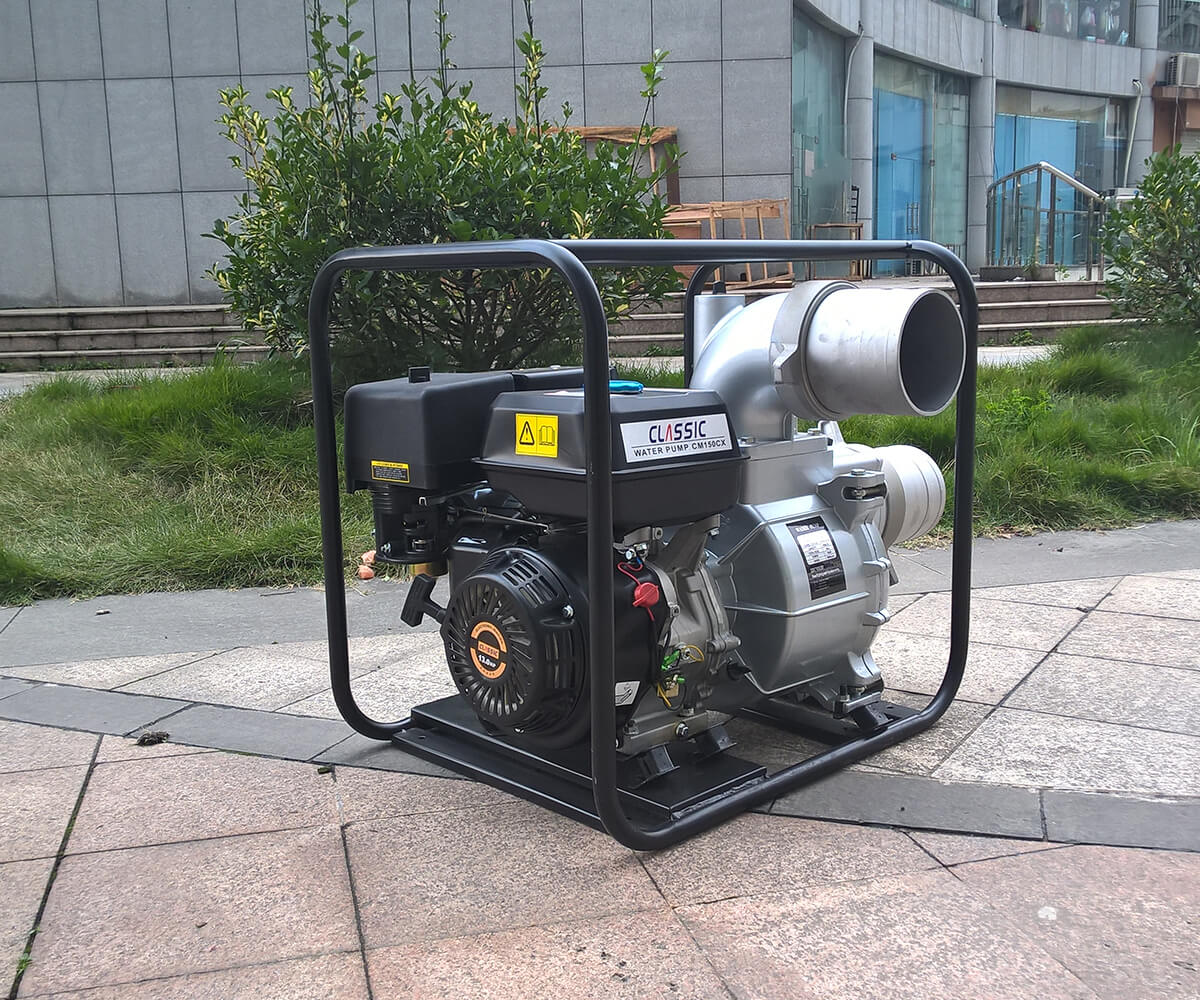

Full-trash vs. semi-trash pumps: Key differences explained
When choosing between full-trash and semi-trash pumps, understanding their core differences is essential for selecting the right tool for the job. Here’s a comparative analysis of these two types of pumps which are essential to facilitate informed decision-making.
Solid-handling capability
The most significant difference between full-trash and semi-trash pumps lies in their ability to handle solid materials.
Full-trash pumps are engineered to move large volumes of debris-laden water. With wide impeller clearances and reinforced construction, they can pass solids ranging from 2 to 3 inches or more, including rocks, gravel, branches, and thick sludge. These pumps are ideal for construction sites, flood recovery, and agricultural runoff where high debris content is expected.
Semi-trash pumps have a more limited solids capacity, typically handling particles up to 1 to 1.5 inches in diameter. They work well for moderately dirty water, such as irrigation, pond drainage, or minor flood cleanup, but may clog in environments with coarse or heavy debris.
Flow rate and head capacity
Both full-trash and semi-trash pumps offer strong flow rates and head capacities, but full-trash pumps generally perform better in high-volume, long-distance pumping. Their larger impellers and wider pathways allow for greater throughput, making them suitable for construction sites and flood control. Semi-trash pumps, while effective, are better suited for medium-duty tasks like irrigation or draining ponds, where extreme power isn’t required.
Portability and size
Full-trash pumps are built for durability, with thicker casings and heavier construction. This ruggedness comes at the cost of portability, making them ideal for stationary or semi-permanent installations.
Semi-trash pumps, in contrast, are lightweight and compact, allowing for easy transportation and quick deployment. They’re preferred for temporary setups, tight spaces, or operations that require frequent movement of equipment.
Cost considerations
Due to their heavy-duty build, larger impellers, and superior solids-handling, full-trash pumps typically have a higher upfront cost. However, this investment is justified in harsh environments where performance and reliability are critical.
Semi-trash pumps offer a more affordable solution for moderate-duty applications. Their lower cost and reduced maintenance needs make them ideal for residential, agricultural, and general-purpose use.
Operational performance
Full-trash pumps excel in challenging environments, offering uninterrupted operation even in debris-heavy water. While they may be less efficient in clean-water scenarios, they ensure minimal downtime in tough conditions.
Semi-trash pumps deliver smoother, quieter, and more energy-efficient performance when used with light debris or clean water. However, their performance can decline quickly if exposed to larger solids or abrasive materials, which they aren’t designed to handle long term.
How to choose between full-trash and semi-trash pumps
Selecting the right pump starts with a clear understanding of your specific needs. Both full-trash and semi-trash pumps have distinct advantages, and the best choice depends on several important factors. Use the following guide to help you decide which pump fits your application:
Assess the application requirements
Begin by evaluating the nature of the job and the working environment.
Full-trash pumps are built for demanding tasks such as construction dewatering, flood control, or draining ponds with thick mud, sticks, and rocks. Their rugged design ensures consistent performance in debris-heavy conditions.
Semi-trash pumps are better suited for lighter duties like irrigation, residential water removal, or transferring water with occasional small debris. They are ideal for controlled, cleaner environments.
Understand particle size and debris concentration
The type and amount of debris in the fluid is a critical factor.
Full-trash pumps can handle larger solids (typically up to 2–3 inches in diameter) and a high concentration of debris without clogging or damage.
Semi-trash pumps are capable of passing smaller solids (up to 1–1.5 inches) and are suitable for moderate debris levels. Excessive solids may overwhelm their design and lead to clogging.
Consider flow rate and head requirements
Evaluate how much water you need to move and how far it needs to go.
Full-trash pumps are designed to move large volumes of water while passing solid materials easily. They are well-suited for applications that require both high flow rates and debris handling.
Semi-trash pumps offer better efficiency when working with cleaner water, making them ideal for moderate flow needs and shorter pumping distances.
Evaluate the operating environment
Match the pump’s durability to the working conditions.
Full-trash pumps thrive in tough environments like construction sites, mining areas, or flood zones. Their reinforced housing and heavy-duty parts resist wear from mud, rocks, and extreme conditions.
Semi-trash pumps are more suitable for calm settings such as residential yards, landscaping sites, or small farms, where the pumping task involves fewer physical demands.
Factor in budget constraints
Make sure the pump aligns with your financial expectations.
Full-trash pumps carry a higher upfront cost due to their durability and solids-handling capabilities. They’re a wise investment for users facing frequent, tough jobs.
Semi-trash pumps are more affordable and cost-effective for occasional or light-duty use, offering a solid return in low-debris environments.
Maintenance expectations
Consider your comfort with ongoing maintenance.
Full-trash pumps require more regular upkeep due to their work in rough environments. However, they are designed for easier disassembly and cleaning when dealing with large debris.
Semi-trash pumps typically demand less maintenance in clean applications but can wear quickly or clog if used improperly in debris-heavy conditions.

Conclusion
Full-trash and semi-trash pumps are essential tools in fluid management, each designed for specific tasks. Choosing the right pump depends on debris size, flow requirements, and working conditions.
Each type has its pros and cons. Full-trash pumps are more powerful but costlier and heavier. Semi-trash pumps are more efficient and affordable but less suited for heavy debris.
As a professional trash water pump manufacturer in China, we offer both full-trash and semi-trash pumps to meet your needs. Whether for construction or irrigation, we have the right solution. Visit our website today to explore reliable, high-quality pump options.
Most Popular Posts
QUESTIONS?
CONTACT US TODAY.
buy?
Related Posts

difference between water pump and fire fighting pump
This research highlights the key differences between water pumps and firefighting pumps, focusing on their characteristics, operational mechanisms, and ideal applications.

types of irrigation pumps
In this article, BISON will explore the most common types of irrigation pumps—centrifugal, submersible, turbine, and diaphragm.

airlocks in water pumps
BISON will walk you through the causes, signs, and troubleshooting steps of air locks to help you restore the functionality of your water pump.

water pump problems and solutions
Having trouble with your water pump? This article will guide you through practical solutions to these common issues.